
 Share
From Pilots to Scale: IIR Launches the 5th Edition of the Blue Book at MOP-38 in Kigali
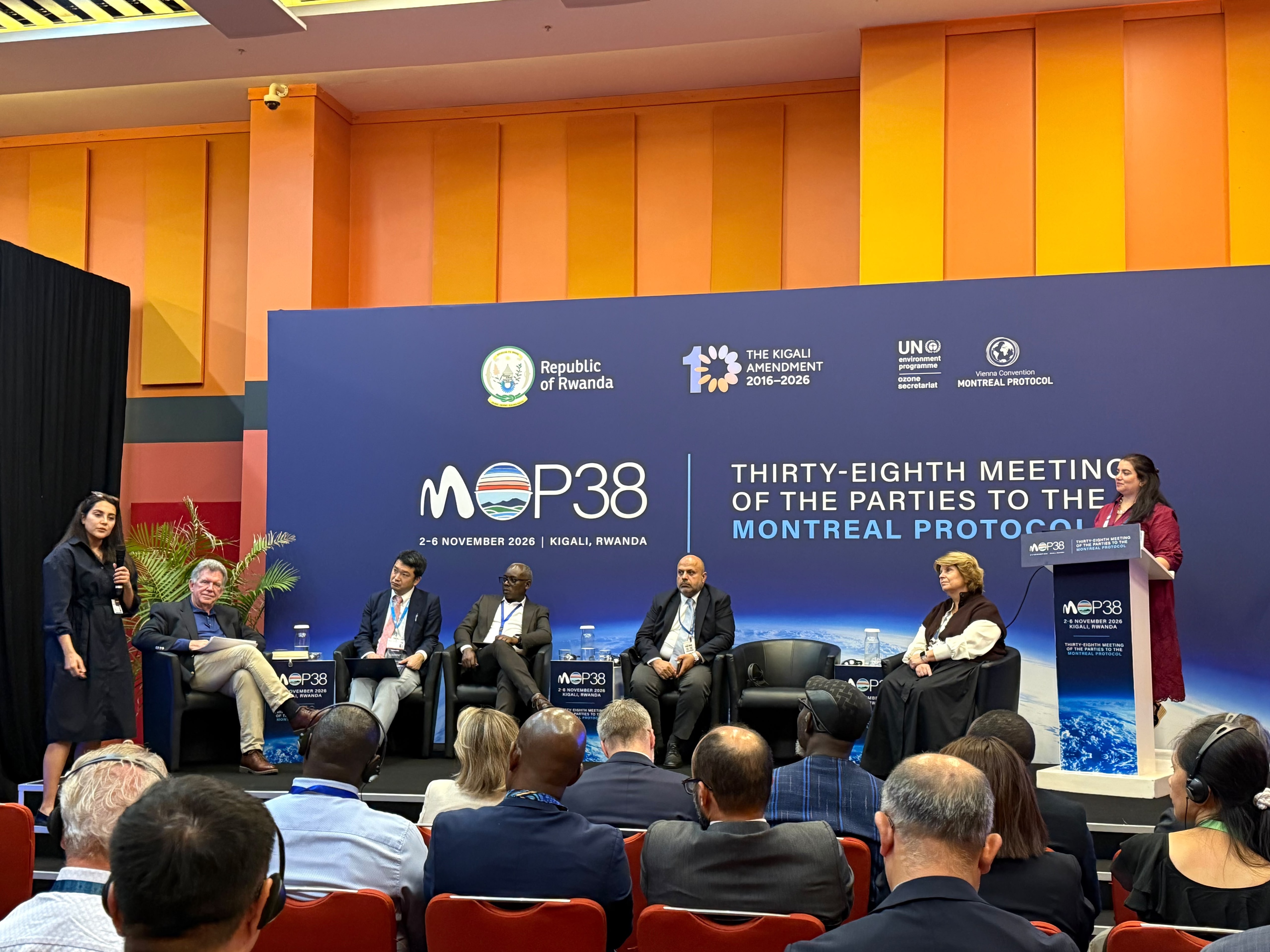
Live photo in Kigali, 2nd November 2026
On 2 November 2026, the International Institute of Refrigeration (IIR) launched the fifth edition of the Blue Book, Recommendations for Chilled Storage of Perishable Produce, at a side event of the 38th Meeting of the Parties to the Montreal Protocol in Kigali, co-organised with the Climate and Clean Air Coalition (CCAC). The session put the science in front of national ozone officers and policymakers, alongside country and industry experience in building sustainable cold chains.
Titled Cold Chain Temperature Standards, Refrigerants and Efficiency for Cutting Food Loss and Emissions for Kigali's Next Decade, the event was moderated by Souhir Hammami, IIR Director of Scientific and Technical Information, and opened by Yosr Allouche, IIR Director General.
Seven decades of the Blue Book
Professor Judith Evans, UK Delegate to the IIR, President of IIR Section C (Biology and Food Technology) and a professor at London South Bank University, presented the new edition. First published in 1959, the Blue Book has been revised in 1967, 1979, and 2000, each time reflecting the state of the science: chilling injury, controlled and modified atmospheres, intermodal transport, prepared foods, and food safety.
The fifth edition, prepared by 56 authors and reviewers from around the world, updates every chapter. It adds new sections on definitions, eggs, bread (bake-off), and brewing and non-fruit juice drinks. It also covers fruit and vegetables, meat and poultry, fishery and dairy products, ready-prepared foods, cut flowers and seeds, together with chilling technology, modelling and the use of low-GWP refrigerants.
What it means for policymakers
The action case is clear. The IIR estimates that low-income countries could save around 144 million tonnes of food a year if they had the same food cold chain infrastructure as developed countries. Food loss also wastes the land, water, energy and labour used to produce it. About 28% of the world's agricultural land grows food that is never consumed.
For Article 5 countries, the Blue Book offers a single, agreed source of expert information on storage temperature, humidity and atmosphere, and on the consequences of delayed cooling for products from berries to tomatoes. Governments have often relied on it to build consensus. National ozone units and equipment designers can use it to choose suitable refrigeration systems, packaging and low-GWP refrigerants for each food process.
The electronic version is free on the IIR website. Printed copies will be available for a charge.
From pilots to scale
Öznur Öztürk (CCAC) presented lessons and principles from CCAC cold chain projects. National experiences followed:
- Kenya: Gerphas Opondo, Executive Director of the Environmental Compliance Institute, described solar-powered cold storage for fishing communities without reliable grid electricity. The pilots combine thermal storage with low-GWP refrigerants and include technician training.
- Japan: Iino Satoru, Director of the Office of Fluorocarbons Control Policy at the Ministry of the Environment, showed how refrigerant GWP targets and subsidies for natural-refrigerant equipment work together. Supported equipment reportedly achieved energy savings of around 30–35%.
- Jordan: Awwad Salameh, UNIDO Montreal Protocol Projects Coordinator, presented Jordan's efforts to place sustainable cooling in national climate and development planning. Affordability, technical training and reliable data remain challenges.
Kevin Fay of the Global Cold Chain Alliance set out what industry needs: reliable power and transport, efficient equipment and low-GWP refrigerants, trained technicians, affordable finance, and predictable policy. Investments succeed when these come together. Projects of the Global Food Cold Chain Council illustrated the point. A shared cold room in Kenya reported a 40% cut in post-harvest losses, with an estimated payback of 2.5 years. In Somalia, an ice-making project reported average spoilage falling from 20% to under 1%.
However, as one message from the room put it: a cold room is not a cold chain.
Looking ahead
Ava Bahrami, CCAC, UN Environment Programme, closed the event. Speakers called for stronger links between refrigeration, agriculture, energy, finance and climate action, and for partnerships that share responsibility for delivery. In the tenth anniversary year of the Kigali Amendment, they also pointed to the renewed Friends of the Kigali Amendment initiative, which gives industry partnership a central place. CCAC reaffirmed its support to developing countries through technical assistance, project funding, knowledge sharing, and partnerships.
The IIR thanks the Blue Book authors and reviewers, the CCAC, and all speakers and participants.