
 Share
ShareUK heat pump sales reach new record (+27%) as the sector’s economic potential grows
New statistics published by the Heat Pumps Association UK report that sales strongly increased in 2025, with a total of over 125,000 units sold, reflecting continued policy support and growing interest in low-carbon heating. The analysis highlights major benefits for jobs, energy security and the economy, but warns faster expansion is needed to meet national targets.
Record sales demonstrate steady market growth
New data published by the Heat Pump Association (HPA) UK [1] shows that in 2025 heat pump sales in the United Kingdom reached a new high of 125,037 units, with a +27% increase compared with the previous year. The figures confirm continued expansion of the low-carbon heating market, although the growth rate has slowed from the sharp 56% increase recorded in 2024.
All major heat pump categories recorded growth in sales. Air-to-Water monobloc systems rose by 26%, Ground- and Water-source heat pumps increased by 32%, and Domestic Hot Water heat pumps grew by 36%. Hydronic systems, which provide space heating and hot water through water-based distribution, accounted for the vast majority of sales.
Domestic manufacturing is also strengthening. Around 36% of units sold were produced in the UK, and the number of UK-manufactured heat pumps increased by 38% compared with 2024.
Despite the positive trend, the HPA UK warns that stronger momentum will be required to meet the government’s target of installing 450,000 heat pumps annually by 2030 under the Warm Homes Plan. Achieving this goal would require a sustained annual compound growth of about 33% [2].
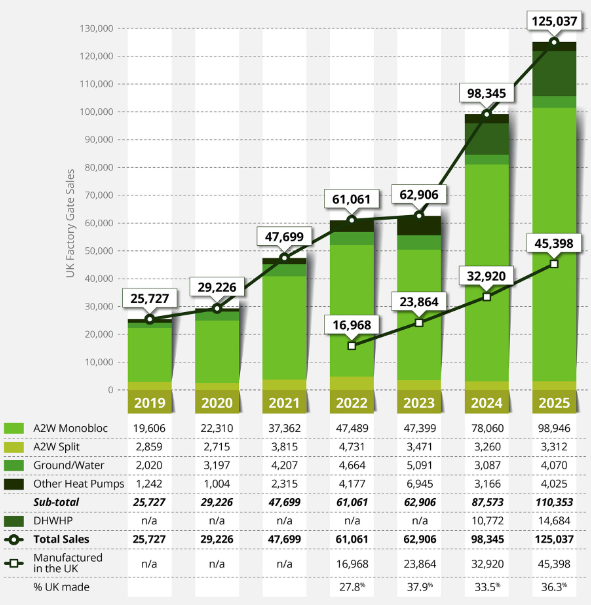
Figure 1. Annual heat pump sales in UK [1].
Major economic and energy benefits projected
Beyond emissions reductions, the latest HPA report “From carbon to competitiveness: the UK opportunity associated with decarbonising residential heating” [3] suggests that scaling up heat pump deployment could deliver substantial economic gains. The number of residential hydronic heat pumps in service is predicted to increase from 0.5 million units in 2025 to 2.5 million units by 2023, and 9.3 million units in 2035. In such a scenario, around £14 billion could be added to UK Gross Value Added (GVA) over the next decade thanks to hydronic heat pumps alone.
By 2035, the broader residential heating sector could grow from £12.2 billion today to £22.5 billion, with heat pumps expected to become the largest contributor to economic value by the early 2030s. Manufacturing capacity could expand dramatically, potentially increasing 15 to 27 times for the domestic market, while employment across residential heating is projected to double to about 144,000 full-time equivalent (FTE) jobs.
The transition also has implications for energy security. Each installation reduces reliance on fossil fuels, and widespread adoption could cut annual gas demand by a total amount of 63 TWh by 2035 (a reduction of 22%), enough energy to run the London Underground for 75 years. This would help lowering the UK’s dependence on imported energy; additional benefits include improved air quality, reduced health impacts from pollution, and significant cuts in greenhouse gas emissions from home heating.
These figures reinforce the strategic importance of heat pumps for decarbonising buildings, but highlight that policy certainty, lower electricity costs relative to gas, and continued investment will be critical to unlock the sector’s full growth potential.
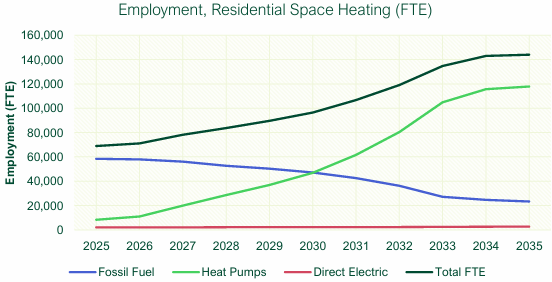
Figure 2. Employment relating to residential space heating [3].
Sources
[1] Heat Pump Association UK. Statistics. https://hpauk.org.uk/resources/statistics/
[2] Heat Pump Association UK. https://hpauk.org.uk/uk-heat-pump-sales-reach-record-high-in-2025-but-more-must-be-done-to-meet-government-targets/
[3] Heat Pump Association UK. From carbon to competitiveness: the UK opportunity associated with decarbonising residential heating. https://hpauk.org.uk/wp-content/uploads/2026/01/HPA-UK-From-Carbon-to-Competitiveness-FINAL.pdf
Image credits: Heat Pump Association UK