
 Share
ShareWorld Cold Chain Symposium 2025 highlights institutional collaboration and investment innovation
Nairobi, Kenya - 1 November 2025. The World Cold Chain Symposium (WCCS) convened global experts, industry leaders, and policymakers at the UNEP Headquarters in Nairobi, ahead of the 37th Meeting of the Parties to the Montreal Protocol.
Organised by the Global Food Cold Chain Council (GFCCC) in partnership with UNEP OzonAction and Carrier, this year’s theme, “Energizing the Private Sector”, underlined the transformative potential of public-private collaboration in building sustainable cold chains.
The event featured four sessions, each addressing critical dimensions of cold chain development:
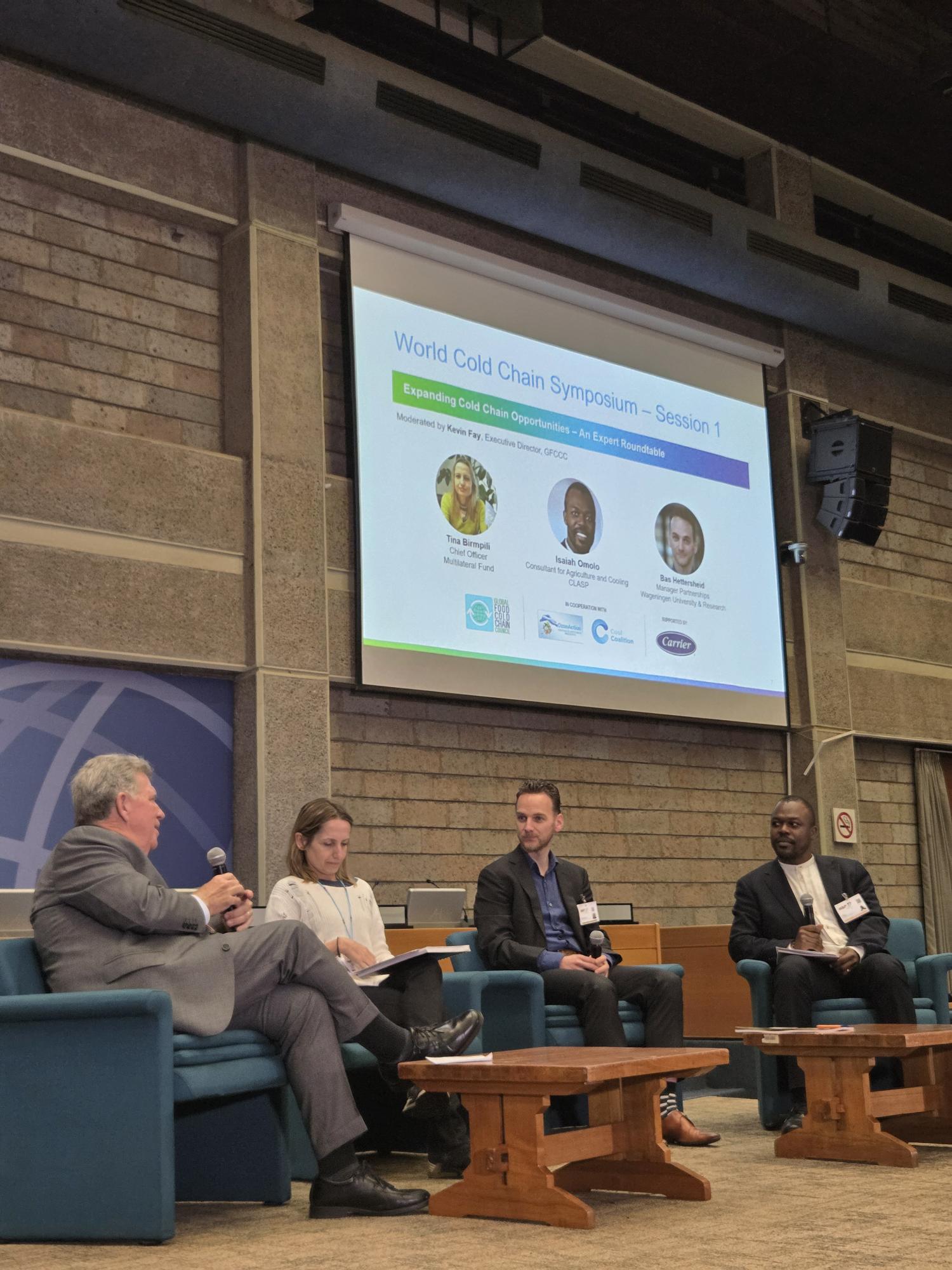
Session 1: Expanding Cold Chain Opportunities
This roundtable explored the intersection of environmental policy, energy access, and economic development. The Kigali Amendment allowed for a more holistic approach, broadening the mandate and creating opportunities to drive the development of the cold chain. The speakers underlined the importance of cross-ministerial collaboration, regulatory approaches that support innovation, and the transition to public-private partnerships to drive investment to scale up solutions.
Session 2: Early Success – Programs That Are Working
This panel showcased successful initiatives from organisations such as WWF, DanChurchAid, and UNIDO, highlighting models that integrate solar-powered systems and revolving funds. Discussions focused on the shift from grant-based support to blended finance and pay-per-use models, aiming to de-risk investments and empower local actors.
Session 3: Sustainable Technologies – Report from the Private Sector
This session brought together Industry leaders Carrier, Bitzer, and Danfoss to emphasise the role of the private sector in driving innovation and investment. They highlighted cold chain related solutions and programmes that are driving sustainability, with a focus on technology deployment and business model adaptation to respond to the local context needs and practices.
Marco Durán, representing the International Institute of Refrigeration (IIR), contributed to this session by presenting the SophiA and AGRI-COOL projects. These initiatives, funded by the European Union, developed through consortiums of African and European research centres and industry partners, developed innovative container solutions for the health and food cold chain.
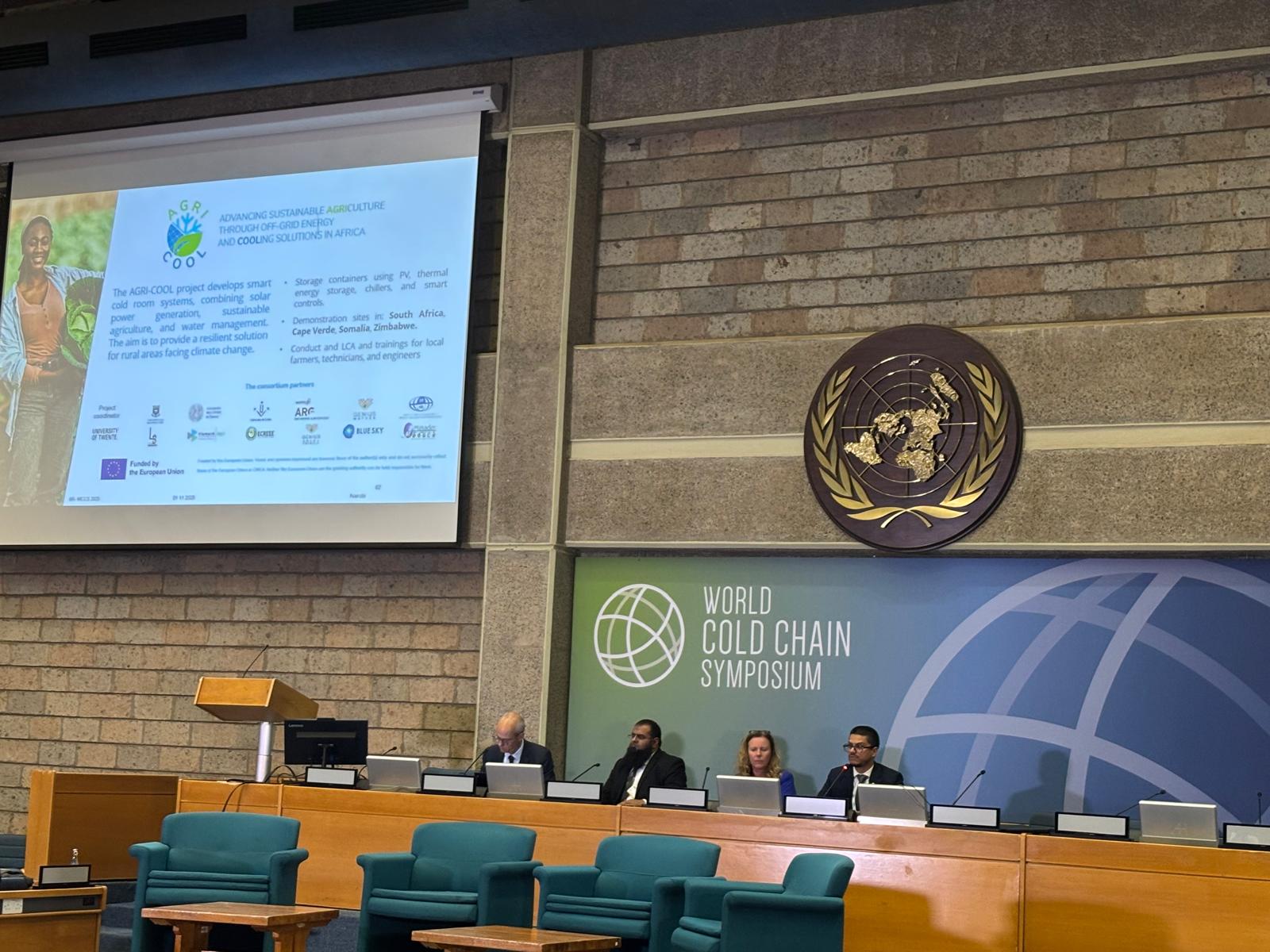
Marco emphasised the importance of applied research to develop tailored solutions that respond to the needs of the local communities where the projects are implemented, as well as developing the skills through exchange between consortium partners, and the training sessions organised by the programmes.
Session 4: Search for Scalable Projects
The final session featured presentations from emerging ventures such as KK Fresh Produce Exporters, IKIC Impact Ventures, and KIVU Cold Group, showcasing promising projects ready for investment. The discussion reinforced the importance of building a robust pipeline and connecting innovators with financing.
The symposium concluded with a keynote and closing remarks, followed by a networking reception, leaving participants with better tools to drive cold chain solutions globally.