
 Share
ShareCloser industry-science ties could boost heat pump performance and cut costs
An article co-authored by IIR Science and Technology Council (STC) member Christian Vering discusses how improved testing methods and closer collaboration between manufacturers and researchers could enhance heat pump performance and reduce costs.
A recent article published in npj (Nature Partner Journal) Clean Energy [1] and co-authored by the IIR STC member Christian Vering, Junior Member of IIR Commission E2 and Vice-Chair of the IIR Life Cycle Climate Performance (LCCP2) Guideline Update Working Group, addresses the challenge of designing heat pump systems that achieve optimal performance and cost-effectiveness. While heat pumps are a key technology for decarbonising the building sector, their higher upfront costs compared with conventional heating systems make appropriate system selection and design essential for their wider deployment.
The authors emphasise that optimal heat pump design should go beyond selecting systems based on standardised performance indicators alone. In particular, the seasonal coefficient of performance (SCOP) plays a crucial role in identifying solutions that minimise total costs over the system lifetime. The article highlights that current design approaches and testing procedures do not always consider all factors influencing real-world operation, such as control strategies, cycling behaviour and defrost processes, which can affect predicted performance.
Towards better data and more efficient heat pump deployment
The article also highlights the need for closer collaboration between manufacturers and the research community. The authors suggest that more comprehensive performance data, including dynamic operating measurements under different temperature conditions and information on backup heater operation, would support the development of improved design methodologies and more reliable predictions of seasonal performance.
According to the authors, better data could help reduce the widespread oversizing of heat pump systems, lowering investment costs while improving operational efficiency. The article concludes that combining enhanced testing procedures with advanced system design methods would benefit manufacturers, installers and end users at the same time, ultimately supporting a faster and more cost-effective transition to low-carbon heating technologies.
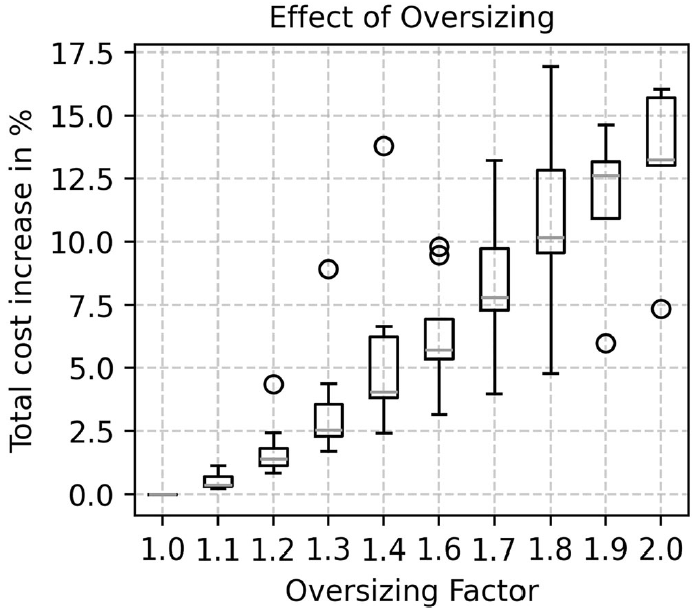
Figure. Effect of oversizing in heat pump installations: total cost increases for increasing oversizing factors. [1]
For more information, the article is available in open access in npj Clean Energy.
Source:
[1] Römer, F., Vering, C., Göbel, S. et al. Towards optimal heat pump system design: with a little help from the manufacturers. npj Clean Energy 2, 12 (2026). https://doi.org/10.1038/s44406-026-00028-6