
 Share
SharePassive cooling can reduce energy demand by 35 to 70% in the ASEAN residential sector
Among countries of the Association of Southeast Asian Nations (ASEAN), a study showed that integrating passive cooling strategies into building design can reduce cooling energy demand by 35 to 70%.
According to the World Meteorological Organization (WMO) “State of the Climate in Asia” report, the region has warmed faster than global average over the past 30 years [1]. In South-East Asia, high temperatures, rapid economic growth and urbanisation lead to a significant increase in energy demand, particularly for air conditioning.
This surge in energy consumption poses challenges for sustainability and environmental impact. Consequently, passive cooling strategies in building design and construction emerge as a key solution in addressing these challenges. Passive cooling helps maintain lower indoor temperatures, therefore reducing cooling loads and the amount of energy needed to bring indoor temperatures to a comfortable level.
Member countries of the Association of Southeast Asian Nations (ASEAN) region experience both high temperatures (25°C to 35°C) and humidity levels (often exceeding 70%), which complicate cooling efforts but also inspire innovative design solutions [2].
According to a report published by the ASEAN Centre for Energy [2], high performance building envelopes with insulated roofs, walls and window glazing offer the greatest benefits in terms of maintaining comfortable indoor temperatures and reducing cooling loads. Where appropriate, natural ventilation can be harnessed through strategic building orientation and window placement, reducing reliance on mechanical cooling. Shading devices, high thermal mass materials, and reflective surfaces can effectively mitigate solar heat gain and reduce building energy use intensity.
To assess the effectiveness of passive cooling strategies, the report also includes building thermal simulations. Findings offer valuable insights into thermal comfort across different climatic conditions in the region. For example, in the tropical climate of Singapore, the use of passive cooling can reduce cooling energy demand by almost 42% [2].
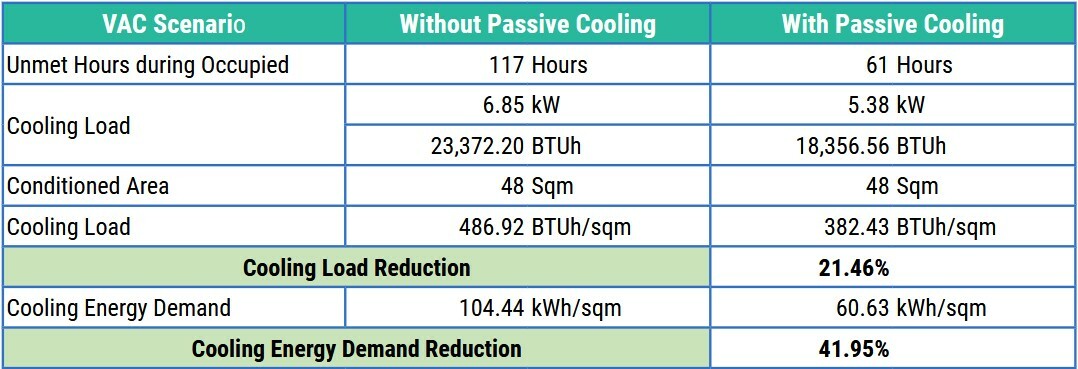
Across climates, the authors found that the use of passive cooling allowed cooling energy demand reduction ranging from about 35% in rural areas with tropical climate to up to 70% in sub-tropical climate [2].
Clear policy indicators are required to effectively measure and promote the integration of passive cooling strategies. By incorporating these indicators into building codes and regulations, policymakers can create a robust framework that not only encourages the use of passive cooling techniques but also ensures compliance with energy efficiency standards.
For more information, the complete report is available on FRIDOC and on the ASEAN Centre for Energy website.
Sources
[1] WMO. State of the Climate in Asia 2023. https://wmo.int/publication-series/state-of-climate-asia-2023
[2] ASEAN Centre for Energy. Passive Cooling Strategies: Current Status and Drivers of Integration into Policy and Practice within ASEAN's Building Sector. https://aseanenergy.org/publications/passive-cooling-strategies-current-status-and-drivers-of-integration-into-policy-and-practice-within-aseans-building-sector/
Image credits Timo Volz: Singapore Supertree Grove. The Supertrees harness solar energy, provide shade, reduce heat, and enhance air circulation throughout the area. https://www.gardensbythebaysingapore.com/supertree-grove/