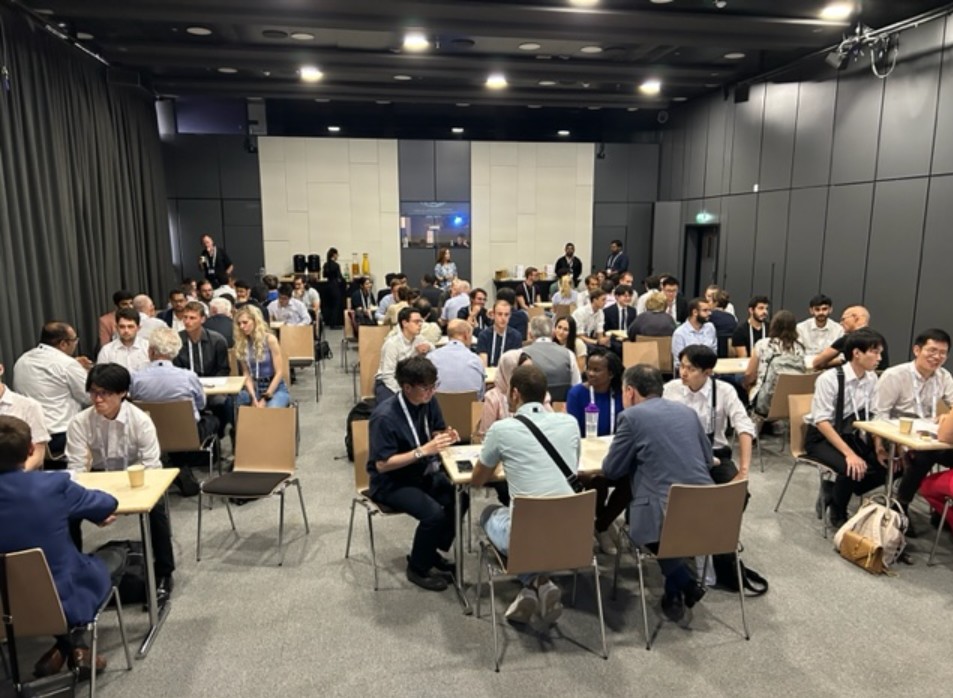
Working Group - Careers in Refrigeration “CaRe”
Objectives of the working group
- to reverse the predicted shortage of engineers, particularly in the refrigeration field;
- to make the importance of the refrigeration industry more visible to the general public and particularly to the young generation;
- to contribute to the creation of employment for young generation including women in refrigeration;
- to identify problems and obstacles that stop the young generation to aspire and envisage a career in refrigeration ;
- to develop and put forward an international and national strategic plans to promote refrigeration career to the young generation including women;
- to develop synergy and co-ordination between the different stakeholders in the refrigeration field;
- to provide the necessary recommendations to attract more young people including women to a refrigeration career, considering the social, economic, technical and environmental aspects of the different countries.
Working group team
President:
Christian VERING (Germany)
Vice-presidents:
Jingyu CAO (China)
Binfei ZHAN (China)
Michael KAUFFELD (Germany)
Laura FEDELE (Italia)
Gratiela TARLEA (Romania)
Monique SENE (Senegal)
Judith EVANS (UK)
Catarina MARQUES (UK)
Secretaries:
Yulong SONG (China)
Dr. Ina COLOMBO (France)
Dr. Monique BAHA (France)
IIR commissions involved:
All commissions
Activities
Mentorship Program for Careers in Refrigeration, Air Conditioning, and Heat Pumps
1. Background
The refrigeration, air conditioning, and heat pump sector is at the centre of some of the most pressing global challenges: the cold chain for food and vaccines, the phase-down of high-GWP refrigerants under the Kigali Amendment, the electrification of heating, and the growing demand for sustainable cooling in a warming world. At the same time, the sector faces a well-documented skills and succession gap. Experienced professionals are approaching retirement while the field struggles to attract, retain, and develop young talent, and career pathways in the sector remain poorly visible compared to adjacent engineering disciplines.
Our international network brings together an unusual asset: senior experts from academia and industry with decades of experience, and a growing community of young professionals seeking orientation, connections and role models. A structured mentorship program is a low-cost, high-impact way to connect these two groups, transfer knowledge across generations and strengthen the sector's talent pipeline.
2. Objectives
The program aims to support the professional development of young professionals in the RACHP sector through structured one-to-one guidance from experienced mentors. Specifically, it seeks to help mentees clarify their career direction (academia, industry, policy or international organisations), expand their professional networks, and build sector-specific and soft skills.
For mentors, it offers an opportunity to give back, gain fresh perspectives, and strengthen their leadership and coaching abilities. For the IIIR, it deepens engagement across the network, reinforces our role as a connector in the sector, and creates a replicable model that can be scaled in future cohorts.
3. Programme Structure and Timeline
The pilot will run as a single cohort of five mentoring pairs over a defined period of nine months, structured in three phases.
The launch phase (month 1) includes a joint virtual kick-off event where all participants meet, the program rules and expectations are presented, and each pair signs a simple mentoring agreement covering goals, meeting frequency, confidentiality and mutual commitments.
The mentoring phase (months 2-8) is built around a minimum of one 45-60 minute one-to-one session per month, held virtually or in person where geography allows. Pairs set two to three concrete development goals at the start (for example: preparing a conference presentation, navigating a career transition, understanding certification pathways, or building a publication record). A mid-term check-in event in month 5 brings the whole cohort together to share experiences and allows the coordination team to identify and resolve any struggling pairings.
The closing phase (month 9) consists of a final joint session where pairs present their journey and outcomes, a structured evaluation, and a certificate of participation for all involved. Where possible, the closing event should be tied to an existing agency event or sector conference to give it visibility.
Matching will be done deliberately rather than randomly, based on a short application form capturing the mentee's career stage, interests (e.g. natural refrigerants, cold chain, heat pumps, research vs. industry) and goals, matched against mentor profiles. Both sides confirm the match before the program starts.
4. Target Participants
Mentees: Five young professionals or advanced students in the RACHP field, typically with zero to five years of professional experience: early-career engineers, PhD candidates, technicians moving into engineering roles, or young professionals in policy and standardisation. Selection criteria: motivation (demonstrated through a short application statement), commitment to the full program duration, and active membership in or connection to theIIR’s network. We should aim for diversity in gender, geography and career path.
Mentors: Five senior professionals from academia or industry with at least ten to fifteen years of experience, recruited through personal invitation from the IIR's leadership and network. The invitation and agreement should stress the limited time commitment (roughly one to two hours per month) and the honorary, recognised nature of the role

How to join this working group?
Anyone interested in those issues is invited to become a member of the IIR. Members of the working group are expected to be either private members or representatives of corporate members of the IIR. For more information, you can write to: info@iifiir.org.
Documents of interest

- Terms of reference

- CaRe leaflet