
 Share
ShareFraunhofer ISE Study: Heat pumps achieve high seasonal performance in older buildings
A four-year research project by the Fraunhofer Institute for Solar Energy Systems (ISE) has shown that heat pumps can provide efficient and low-carbon heating in existing homes, including older buildings that haven’t been renovated to modern energy standards
According to the European Heat Pump Association (EHPA), sales of heat pumps grew by 9% in the first half of 2025, a slight recovery after the 23% drop in 2024 (see our previous article).
Heat pumps are dominating the heating market in new buildings. However, homeowners of older existing buildings are still wondering whether they can also operate efficiently and climate-friendly in their homes.
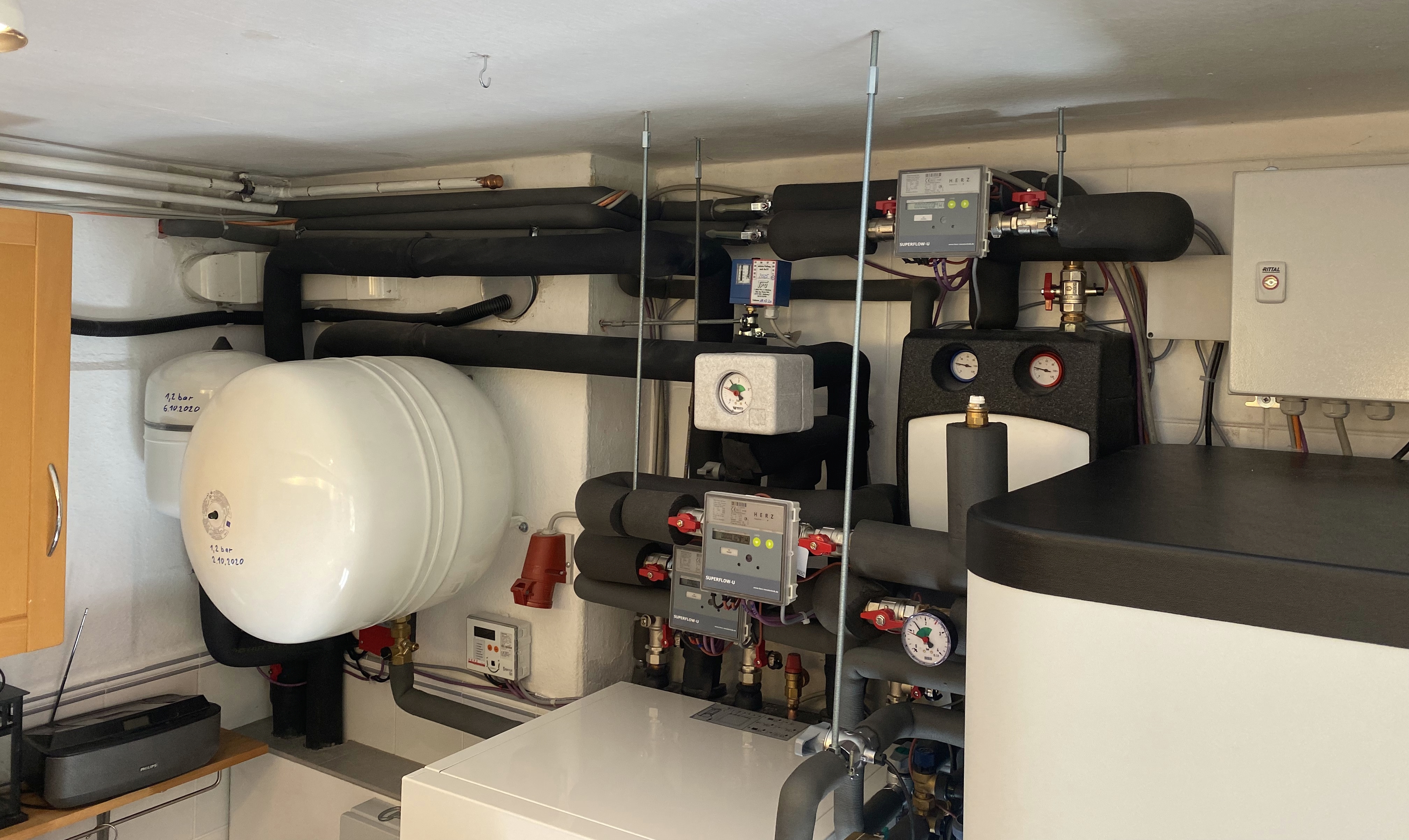
To address these concerns, researchers at the Fraunhofer Institute for Solar Energy Systems ISE conducted detailed measurements on 77 heat pumps in single-family to three-family homes constructed between 1826 and 2001.
The four-year research project showed that heat pumps achieved seasonal performance factors (SPF) ranging from 2.6 to 5.4 in existing buildings. Air/water heat pumps achieved an average SPF of 3.4, meaning they generate 3.4 units of heat from one unit of electricity. The more efficient ground-coupled systems exhibit an average SPF of 4.3.
The CO2 emissions of the heat pumps were 64 % lower in 2024 compared to those of natural gas heating systems. For the first time, CO2 emissions were calculated considering time-variable factors, i.e. using the quarterly emission values from the German electricity mix. These take into account the intra-year or intra-day variance in heat pump efficiency, as well as the contributions of individual power plant types to electricity production.
The research team also investigated how photovoltaic systems can be integrated into heat pump operation. They found that without a battery, buildings with a photovoltaic system achieve 25 to 40 % autonomy and 22 to 37 % self-consumption [a]. With a battery, these ranges shift significantly to 32 to 62 % with building autonomy and 40 to 83 % for self-consumption.
In addition to Fraunhofer ISE, two energy suppliers and nine heat pump manufacturers participated in the project. For more information, visit the Fraunhofer website.
[a] Self-consumption consists of consuming the electricity that you produce yourself using photovoltaic panels set up on the roof of a building, on car park shelters, or on the ground (source)