 Share
ShareThe IIR at ESEF 2025 in the Gambia
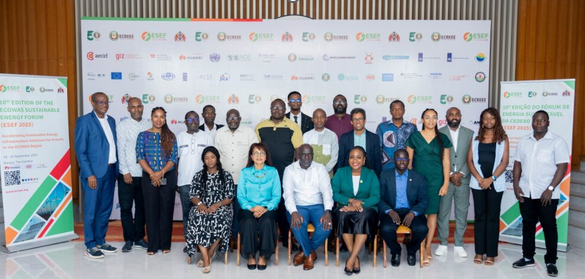
For the third time this year, the IIR took part in the successful 10th edition of the ECOWAS Sustainable Energy Forum (ESEF 2025) at the Sir Dawda Kairaba Jawara International Conference Center, marking not only a decade of ESEF but also the 50th Anniversary of ECOWAS and the 15th Anniversary of ECREEE.
The theme of this edition was “Accelerating Sustainable Energy Infrastructure Solutions for Growth in the ECOWAS Region,” the forum brought together ministers, diplomatic organisations, national experts, private sector leaders, development partners, innovators, and members of civil society to deliberate towards accelerating West Africa’s transition to sustainable energy.
The IIR Director General Yosr Allouche and Ina Colombo (Head of EU and International Programmes) travelled to the Gambia to participate to various high-level plenary sessions including:
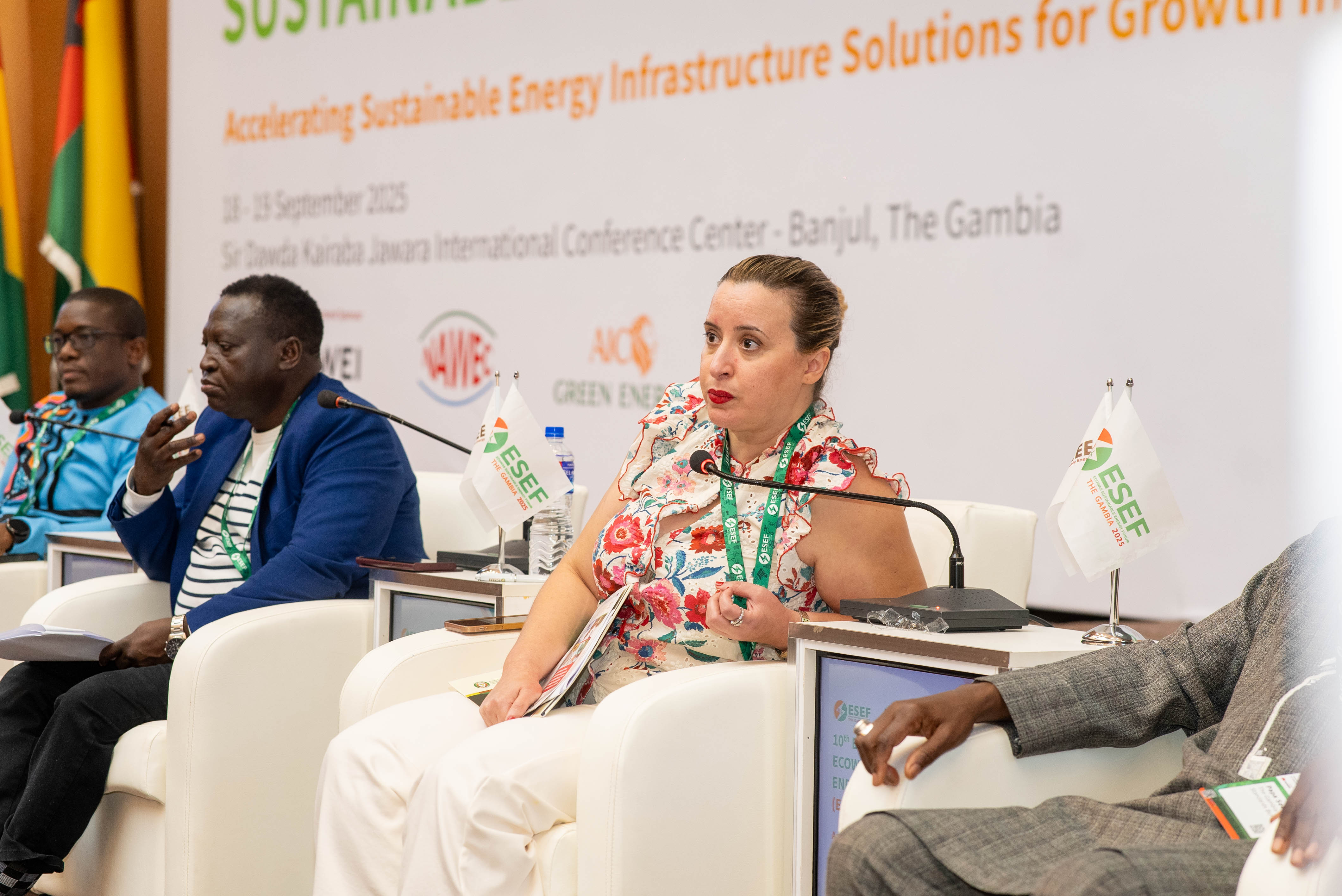
Day 1, Session 2: Energy Efficiency for Sustainable Livelihoods in Africa (Moderated by UNIDO)
Dr. Yosr Allouche Calls for Stronger Cooling Policies and Leapfrogging Opportunities in Africa
At the “Energy Efficiency for Sustainable Livelihoods in Africa” panel under the EELA program, IIR Director General, Dr. Yosr Allouche, urged ECOWAS governments to adopt clear roadmaps for phasing down high-GWP refrigerants, aligned with Kigali Amendment principles but tailored to national capacities, adopt and enforce minimum energy performance standards (MEPS), and harmonise safety and technical regulations across the region, particularly for the safe use of flammable and mildly flammable refrigerants. She highlighted the need for stronger technician training, customs enforcement, and incentives to accelerate the uptake of efficient, clean low-GWP refrigeration solutions.
Dr. Allouche also stressed the transformative role of sustainable refrigeration and cold chains in cutting Africa’s high post-harvest food losses, improving farmers’ incomes, and boosting export competitiveness. Enhancing energy efficiency is essential to achieve the climate target. Solutions are readily available in the market such as adopting renewables, thermal integration, thermal storage, adapted design to cope with high and increasing ambient temperatures, adoption of IoT and AI for predictive maintenance and optimised operation.
Technology is available for Africa to leapfrog directly into clean, efficient refrigeration technologies, but needs to be supported with the appropriate business models and financial mechanisms. Investing in clean and energy efficient cold chains should be prioritised by governments as the sector is not only related to energy issues, but also a pathway to food security, resilient healthcare and societies and economic development across the continent.
Day 2, session 1: Powering food systems in West Africa (Moderated by the Minister of energy of Gambia)
Dr Yosr Allouche emphasised to participants that refrigeration and cold chains are vital for food security, healthcare, and climate resilience, accounting for around 20% of global electricity use and 7.5% of CO₂ emissions. She underlined that expanding sustainable cold chains could halve food loss, prevent vaccine spoilage, and lower emissions through improved energy efficiency, low-GWP refrigerants, and renewable energy. The SophiA project and other funded initiatives, such as INDEE+ were presented as examples of implemented technologies addressing food waste. The IIR called for countries to join the IIR to support the international cooperation which in turn elevates the refrigeration sector within high-level discussions to ensure refrigeration becomes a driver for both development and sustainability.
As part of the events in the run up to ESEF 2025 on the 17th, a dedicated session on Climate-Resilient Cooling, Climate Change, and Gender was organised, supported by the EU-funded projects SOPHIA, AGRICOOL, and EMERGE. Moderated by Dr. Charles Diarra, Project Coordinator at ECREEE, the session highlighted innovative approaches to sustainable and inclusive refrigeration solutions. SOPHIA showcased its advances in climate-resilient refrigeration technologies across four pilot countries. AGRICOOL presented upcoming solar-powered smart cold rooms and agrivoltaic systems to enhance food storage, water management, and sustainable agriculture, including four pilot sites such as the one in Cabo Verde. EMERGE outlined its support for Africa’s green transition through tools, knowledge, and pilot initiatives in Morocco, the Niger River region, and Mozambique for clean energy and sustainable resource planning. The session fostered lively discussions on how resilient cooling solutions can address climate, energy, and social challenges across West Africa.