
 Share
ShareOEWG-47 Side Event Highlights on International Training and Certification Standards for RACHP
The Centro Studi Galileo (CSG) and the European association of refrigeration, air conditioning with support from the International Institute of Refrigeration (IIR) and Institute For Governance & Sustainable Development (IGSD), brought together global experts to address the need for harmonised training and certification in the refrigeration, air conditioning, and heat pump (RACHP) sectors.
Bangkok, 9 July 2025 – At the 47th Open-Ended Working Group (OEWG-47) of the Montreal Protocol, the “International Training and Certification Standards for RACHP: Advancing Energy Efficiency and Preventing Refrigerant Emissions” brought together global experts to discuss the status of certification in the refrigeration, air conditioning, and heat pump (RACHP) sectors and raise awareness on the need for harmonised training, recognition for certified professionals and adequate monitoring.
The Importance of Skilled Technicians for safe and environmentally friendly handling of refrigeration equipment
As global demand for refrigeration continues to grow, ensuring the energy efficiency and environmental sustainability of RACHP systems is critical. While technological innovation plays a key role, the competence of technicians who install, maintain, and service these systems is equally vital. Without proper training, even the most advanced systems risk underperformance, leading to refrigerant leaks, excessive energy use and increased safety risks.
This side event emphasised that harmonised international training standards and robust certification schemes are essential tools for ensuring a sustainability in the sector as well as to contribute to comply with the goals of the Montreal Protocol. Skilled technicians are the frontline defenders of system efficiency, safety, and environmental compliance.
A Global Exchange of Best Practices
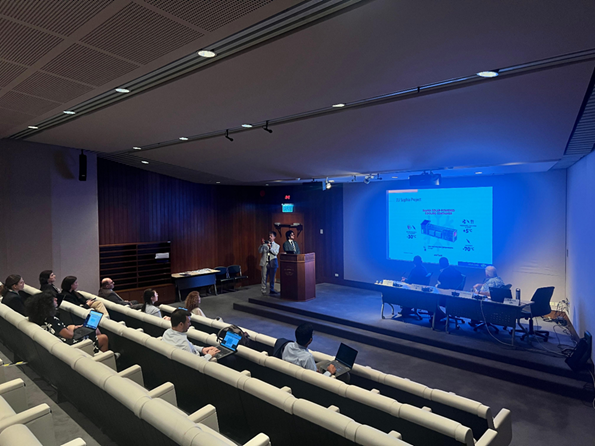
Moderated by Marco Buoni (Centro Studi Galileo, AREA), the event featured a distinguished panel of speakers:
- Marco Duran, International Institute of Refrigeration (IIR)
- Stephen Andersen, Institute for Governance & Sustainable Development (IGSD)
- Marco Buoni, Centro Studi Galileo (CSG), ATF, and AREA
- Baolong Wang, Chinese Association of Refrigeration (CAR)
- Youssef Hammami, National Ozone Unit Tunisia (NOU Tunisia)
The session opened with a welcome reception and remarks by Marco Buoni, setting the stage for a dynamic exchange of insights and strategies.
Key Themes Explored
The event explored four central themes:
- International Standards and Global Perspectives on Regulation and Certification: Marco Duran presented an overview of the international reference standards for safety and environmental requirements for the operation, maintenance, repair, and recovery of refrigerating systems and how they are translated into national and regional regulation and certification programmes.
- Reducing Emissions Through Training: Presenters shared how targeted training programmes help prevent refrigerant leaks and promote best practices in installation and maintenance. Stephen Andersen discussed best practices for the installation of room air conditioners and how these considerations can be translated into contract templates for users to ensure adequate operation of the purchased equipment.
- Certification and Skills Recognition: Discussions highlighted how certification schemes ensure quality servicing, reduce emissions, and support energy performance across the equipment lifecycle.
- Energy Efficiency Across the Lifecycle: Emphasis was placed on how training supports sustained efficiency from system installation to decommissioning.
National and Regional Models from EU, US, Tunisia and China
Case studies from EU, US, China and Tunisia illustrated how national certification schemes – aligned with international standards – can be successfully implemented and scaled.
Marco Buoni introduced the European experience on certification, highlighting the legislation, monitoring practices and its evolution to comply with the EU F-Gas regulation. Stephen Andersen presented the experience in the USA with EPA 608. Youssef Hammami spoke about Tunisia’s programme, supported by UNIDO and aligned with EU regulations, which has certified over 140 trainers and established 40 vocational centres. Baolong Wang elaborated on China’s regulation for the building of training facilities and competencies for HVAC professionals training, highlighting the importance of certification, re-certification and the opportunity to find better ways to train for real life conditions such as with Virtual Reality assisted tools.
The EU SophiA project was mentioned, as an example of an effort to provide sustainable off-grid cooling solutions and clean drinking water for rural and remote health facilities in Africa, together with technology and knowledge transfer through training of local professionals.
Conclusion: A Call for Unified Action
The event concluded with a Q&A session and interactive discussion, reinforcing the consensus that technician certification is a cornerstone in the refrigerant transition. Governments, industry stakeholders, and training institutions must collaborate to expand certification programmes, harmonise standards, ensure recognition for certified professionals and invest in vocational education.