Hide filters Display filters
Main menu
News
Refrigeration sector monitoring
Latest news
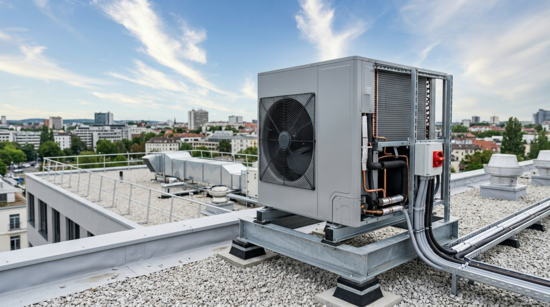
Closer industry-science ties could boost heat pump performance and cut costs
An article co-authored by IIR Science and Technology Council (STC) member Christian Vering discusses how improved testing methods and closer collaboration between manufacturers and researchers could enhance heat...
Read more
Filter :
Topic:
- Show less
+ Show more
Theme :
Keyword :
Close
Subthemes :
2 996 news
Latest news on LNG and bio-LNG infrastructure projects in the pipeline
At the beginning of 2022, several LNG or bio-LNG projects are underway.
The world’s first liquified hydrogen carrier ship en route from Japan to Australia
Since the end of December 2021, the world’s first liquefied hydrogen (LH2) carrier, the “Suiso Frontier”, is achieving its first round trip between Japan and Australia. The voyage is...
Radiative cooling coatings that can adapt to the seasons
A novel material can be used as a coating on building’s rooftops or windows to provide radiative cooling in the summer without overcooling in the colder months.
The district cooling network of Paris will be extended by 158 km within 20 years
Paris’ district cooling network currently covers over 86 kilometres and will be extended to 250 kilometres by 2042. It will increase the city's contribution to the carbon neutrality objective by...
Cryogenics 2021 highlights: applications of liquid nitrogen
Cryopreservation of biological materials to favour biodiversity and cooling of superconducting cables to allow transmission of electrical energy with zero resistance are key applications of liquid...
AHRI releases november 2021 US heating and cooling equipment shipment data
AHRI provides monthly data on heating and cooling equipment shipped by US manufacturers in the US market. The data provided covers the two months prior to the month of release....
Green hydrogen production project in Namibia
In partnership with a French-German consortium, the Namibian government plans to develop a green hydrogen production facility. Although some of the funding may be secured as early as...
Grimsby ice factory preservation plans
Some of the historic ice-making equipment in the derelict Grimsby Ice Factory is to be removed in planned remedial work to prevent further damage to the crumbling building.
European Commission adopts new calculation methodology for renewable cooling
The European Commission has adopted a new calculation methodology in which the renewable share of cooling depends on energy performance. This should serve as an incentive for the...
How to increase market uptake of innovative renewable heating and cooling systems ?
The results of two years of EU-funded research highlight several recommended incentives to motivate the uptake of innovative renewable heating and cooling systems.
AHRI releases latest US heating and cooling equipment shipment data
AHRI provides monthly data on heating and cooling equipment shipped by US manufacturers in the US market.
Applications of artificial intelligence to refrigeration plants
A paper from the IIR TPTPR conference presents the energy performance and maintenance benefits of 19 refrigeration plants using artificial intelligence techniques.
Frost mitigation methods for heat pumps and refrigeration systems
Frost growth is an important issue since defrosting can represent up to 30% of the total energy consumption of refrigerated display cabinets. Review of the various frost mitigation technologies and latest...
Reduce refrigerant leaks in supermarkets
Refrigerant leaks are a recurring problem, particularly in the commercial refrigeration sector. An American initiative aims to identify the main causes of leaks and to propose solutions to reduce...
Midea launches R290 split ACs on the European market
In autumn 2021, Midea, corporate member of the IIR, began marketing R290 split air-conditioning units in Europe. Further imports are planned for early 2022.
New evaporative cooling system for more energy efficient data centres
A dew point cooling system, which is an indirect evaporative cooling system that approaches the dew point, has reduced the electricity consumption of a UK data centre by 80%.
Assessing the market potential of industrial heat pumps in Europe
To address the lack of product development of high temperature heat pumps, a recent article provides manufacturers with an estimate of the industrial heat pump market potential in...
Museums dedicated to refrigeration in the United States
There are several museums dedicated to refrigeration in the United States: one in Pennsylvania has just added a 1936 refrigerated wagon to its collection.
The expansion of refrigeration applications of Thermal Energy Storage and PCMs
Based on a selection of papers from two recent IIR conferences, overview of thermal energy storage and PCM applications in the fields of refrigerated transport, display cabinets, fishing vessels, food processing...
Challenges related to the adoption of air conditioning in emerging economies by 2040
The authors of a recent article modelled the adoption of air conditioning by 2040 in four emerging economies: Brazil, India, Indonesia, and Mexico. The adoption of AC could increase between two- to sixteen-fold,...
Heat pump sales grew in Europe in 2020
According to the latest market report by European Heat Pump Association (EHPA), heat pump sales grew by +7.4% in 2020, offering benefits both in terms of greenhouse gas emission...
World’s largest seawater air-conditioning system commissioned in Tahiti
Thanks to this system, the cold waters of the deep will cool the French Polynesia Hospital Center, saving at least 2.5 million euros of electricity per year.
Focus on COP 26
The Conference of the Parties (COP) 26 was held in Glasgow (UK) from 31 October to 13 November 2021. Its results, while not seeming spectacular, nevertheless reflect important developments that should be noted,...
Indoor air pollution as a health risk
On September 7, industry associations issued an urgent statement to European Union institutions to highlight the importance of indoor air quality in the context of the COVID-19 pandemic.
China implements HFC import and export licensing system
As of 1 November 2021, China has officially begun implementing its HFC import and export licensing system, in accordance with the Kigali Amendment.