
 Share
ShareWorld Science Day: IIR reaffirms the role of refrigeration for sustainable development
This 10 November 2025, IIR joins in the celebration of World Science Day, aligning with this year’s theme of “the science we need for 2050” by highlighting the importance of refrigeration for economic development, food security, public health, and climate resilience.
UNESCO proclaimed 10 November as World Science Day for Peace and Development, to underline the importance and relevance of science in our daily lives.
The refrigeration sector, which includes the food and health cold chain, air conditioning, cryogenics and heat pumps, is recognised within the United Nations as a development priority for its benefits to human life.
IIR’s historical commitment to science for peace and development
Since its creation, the IIR has been actively raising awareness on the importance of refrigeration for the sustainable development and economic growth of all countries [1].
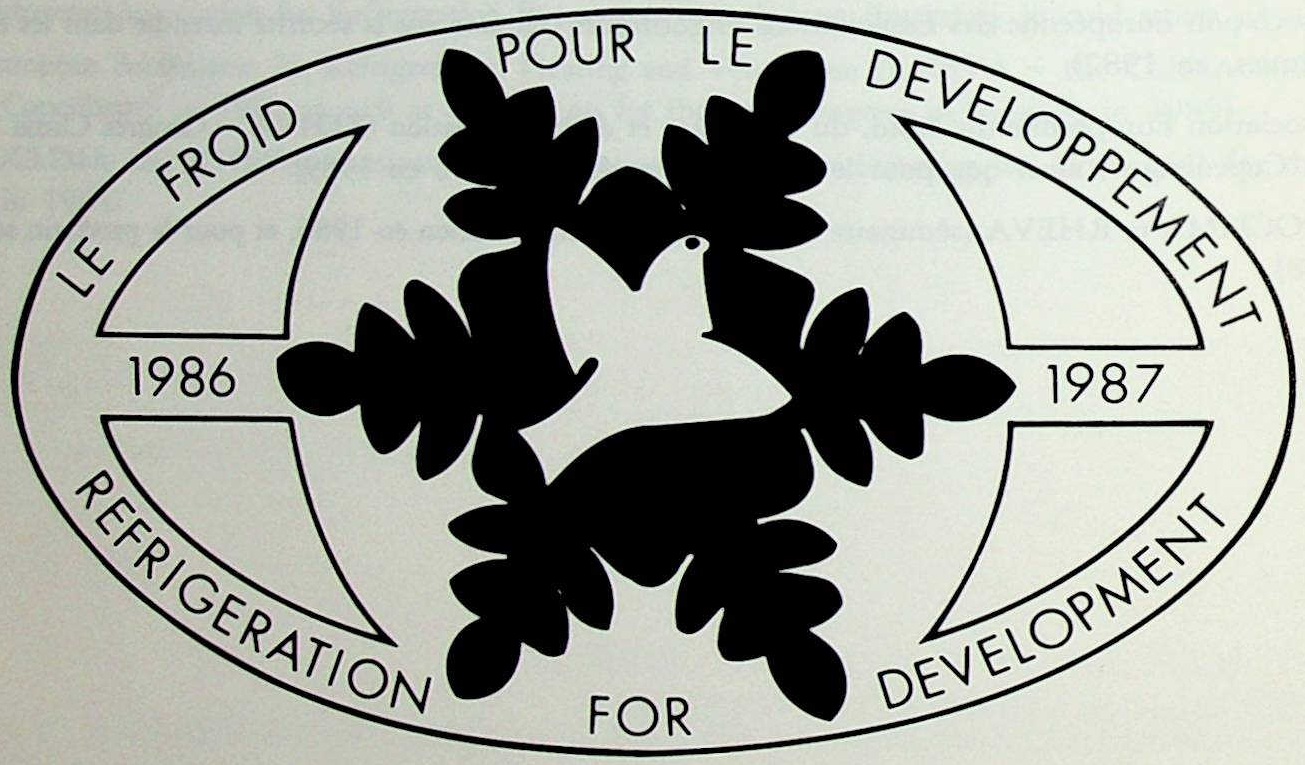
For instance, from June 1986 to the 17th IIR International Congress in Vienna, Austria in August 1987, the IIR ran a campaign promoting “the numerous and often irreplaceable services provided by refrigeration”.
Relayed worldwide through specialised journals, this campaign benefited from the sponsorship of the FAO and the Organization of American States (OAS), the support of UNESCO and the French government, as well as 54 bodies, companies and international organisations.
Refrigeration for sustainable development by 2050
The theme for this year’s World Science Day is “Trust, transformation, and tomorrow: The science we need for 2050”. With the growing frequency and duration of extreme heatwaves and the challenges of global warming, sustainable refrigeration is a global necessity.
In its 60th technical brief, The Role of Refrigeration in the Global Economy (3rd edition), the IIR underlines the importance of refrigeration and heat pump technologies when addressing global challenges [2].
- Food security. As the global demand for food is set to steadily rise in the coming decade [3] and beyond, modernising and expanding global cold chain infrastructure represents a more sustainable solution than investing in large-scale food production. Refrigeration is essential for reducing food loss and waste, and expanding cold chain infrastructure could save 475 million tonnes of food annually, enough to feed 950 million people [2].
- Health. Refrigeration is crucial for vaccine storage and cryogenic medical treatments, contributing to the fight against diseases like polio and cancer as well as the global response to disease outbreaks such as Ebola or COVID-19.
- Energy consumption and climate adaptation. The IIR estimates that by 2050, the global stock of stationary air conditioners could more than double, as part of mitigation strategies to address heat stress [2]. Heat pumps and district cooling systems offer energy-efficient alternatives for heating and cooling, reducing both energy consumption and carbon emissions.
- Innovation and technology. Refrigeration plays a key role in scientific research, including quantum computing, biomedical research, and space exploration.
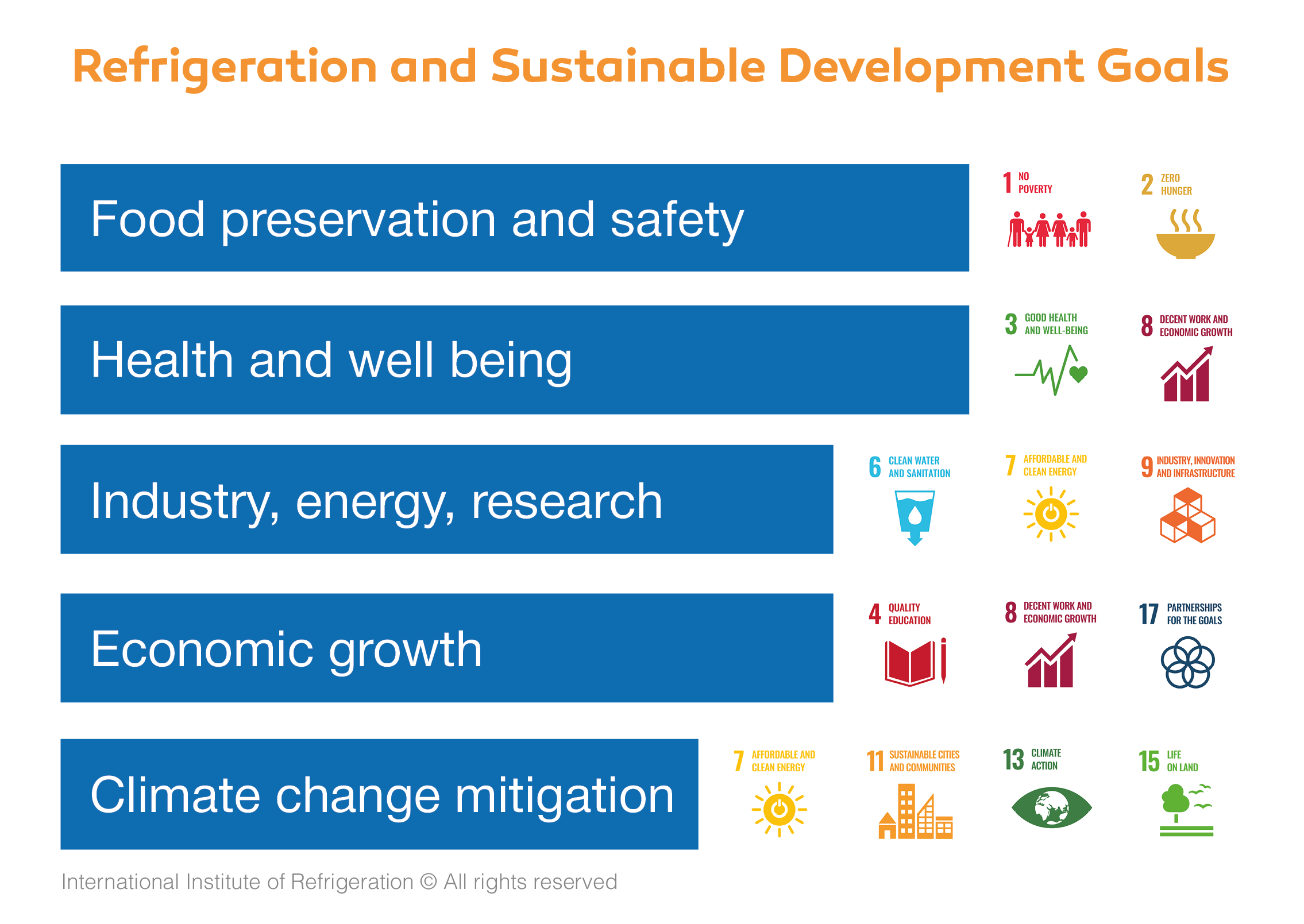
The refrigeration and heat pump sector is intrinsically linked to the United Nations’ Sustainable Development Goals (SDGs). By integrating refrigeration into national and international climate strategies, governments can ensure a sustainable, resilient, and climate-friendly future for the global refrigeration sector.
Sources
[1] The International Institute of Refrigeration. World Conference: Refrigeration for Development. 1986. https://iifiir.org/en/fridoc/world-conference-refrigeration-for-development-5771
[2] Baha M., Hammami S., Dupont J.-L. The Role of Refrigeration in the Global Economy 3rd edition, 60th IIR Technical Brief on Refrigeration Technologies. International Institute of Refrigeration (IIR), Paris. http://dx.doi.org/10.18462/iir.TechBrief.04.2025
[3] United Nations, 2025. Global demand for meat and dairy set to rise, but climate and nutrition gaps remain. https://news.un.org/en/story/2025/07/1165401