Hide filters Display filters
Main menu
News
Refrigeration sector monitoring
Latest news
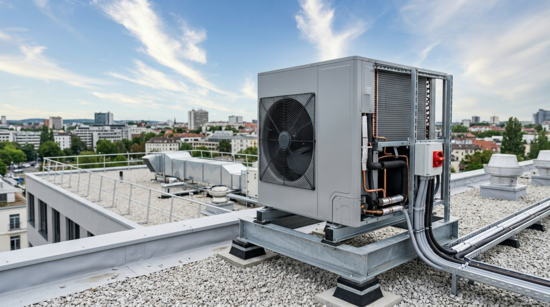
Closer industry-science ties could boost heat pump performance and cut costs
An article co-authored by IIR Science and Technology Council (STC) member Christian Vering discusses how improved testing methods and closer collaboration between manufacturers and researchers could enhance heat...
Read more
Filter :
Topic:
- Show less
+ Show more
Theme :
Keyword :
Close
Subthemes :
2 996 news
Vaccines: a step towards thermostability
Ensilication of the protein molecules of a vaccine against tuberculosis prevents its deterioration by heat.
Evaporative cooling experimentations in urban areas
Various researches are currently being conducted to study the impact of evaporative cooling in urban areas.
ICR 2019: an overview of current refrigeration research (part I)
Presentation of the main scientific and technical topics covered in the papers of the 25th IIR International Congress of Refrigeration and summary of some of the 14 keynotes.
Refrigeration now at the heart of international discussions
The recent G7 meeting in France and the United Nations Climate Action Summit 2019 in the US illustrate the growing importance of the refrigeration sector in international discussions.
Supercomputer with advanced cooling system to support NASA moon missions
The new liquid-cooled Aitken supercomputer will run modeling and simulation workloads for lunar landings.
Pulse technology defrosts surfaces in seconds
A team of Japanese and American researchers is developing with a new, fast and efficient technology to defrost surfaces.
History of the expansion of air conditioning in the United States
An article published in the Guardian goes through the history of air conditioning development in the United States.
ICR 2019: an overview of current refrigeration research (part II)
Research Project CoolFish to explore energy efficient cooling systems on board fishing vessels
The recently launched research project, CoolFish, aims to explore energy efficient cooling systems on board fishing vessels.
MIRAI Intex, new corporate member of the IIR!
Presentation of MIRAI Intex and its flagship product: MIRAI COLD 15.
In brief: IPCC Special Report on Climate change and land
The new IPCC Special Report on “Climate change and land” focuses on the impact of climate change on terrestrial ecosystems and on the role of ecosystems in climate change, and mitigation and adaptation solutions.
The stakes of air conditioning in China
A recent IEA report highlights the impressive growth in current and future demand in the air-conditioning sector in China. However, it considers that strong energy efficiency policies for air conditioners coupled with improved building design and...
An innovative concept of refrigerated semi-trailer
The refrigerated semi-trailer undergoing final test combines electricity production by hydrogen fuel cell and refrigeration production using CO2 as refrigerant.
Benefits of closed display cabinets for food preservation
A recent article in the IJR shows that in comparison to an open display cabinet, a closed display cabinet achieves lower product temperature and better temperature homogeneity, even with a high door-opening frequency.
Autonomous cooling system for food deliveries in the city centre
Coldway Technologies is developing an electric scooter coupled with a self-contained cool box for food delivery in the city centre.
Variable refrigerant flow systems world market
The market for variable refrigerant flow systems grew by 5.7% in 2018.
The global heat pump market in 2018
After a record increase in 2017, the global heat pump market decreased by 3.3% in volume in 2018.
Alternative mixtures for R134a
A NIST study identifies 23 non-flammable or slightly flammable mixtures as R134a alternatives in air conditioning.
Cryogenics 2019: NICA project aims at studying the state of matter existing shortly after the Big Bang
NICA project for a new superconducting accelerator complex in Russia attracted a lot of interest during IIR Cryogenics conference in Prague, in April 2019.
Rail refrigerated transport: two case studies in Europe
While the Rungis fruits and vegetable train in France is experiencing serious difficulties, the new CoolRail rail line linking Spain to the Netherlands offers promising prospects.
The European heat pump market grew another 12% in 2018
EHPA considers that the 11.8 million units of heat pumps installed across Europe in 2018 produced 128 TWh of renewable energy.
2018: a positive year for the French air-conditioning market
Residential and light commercial split units, as well as VRF systems, registered a strong growth.
Cryogenic distillation: a promising technology for carbon capture
Cryogenic distillation is subject to intense R&D works for CO2 capture in CCS facilities. A plant using this technology is under construction in China.
IIR member news: Star Refrigeration chooses CO2 to cool down a beer warehouse
Star Refrigeration, collective member of the IIR, recently published a case study about a CO2 solution used to cool down a beer warehouse.
Alternative refrigerants to high-GWP HFCs
Intensification of international regulations on HFCs such as the Kigali Agreement or the European F-Gas Regulation leads refrigerant manufacturers to search for alternatives to high-GWP HFCs. Focus on some alternatives to R410A and R23.